
What is Unity in CRM? A Complete Beginner Guide
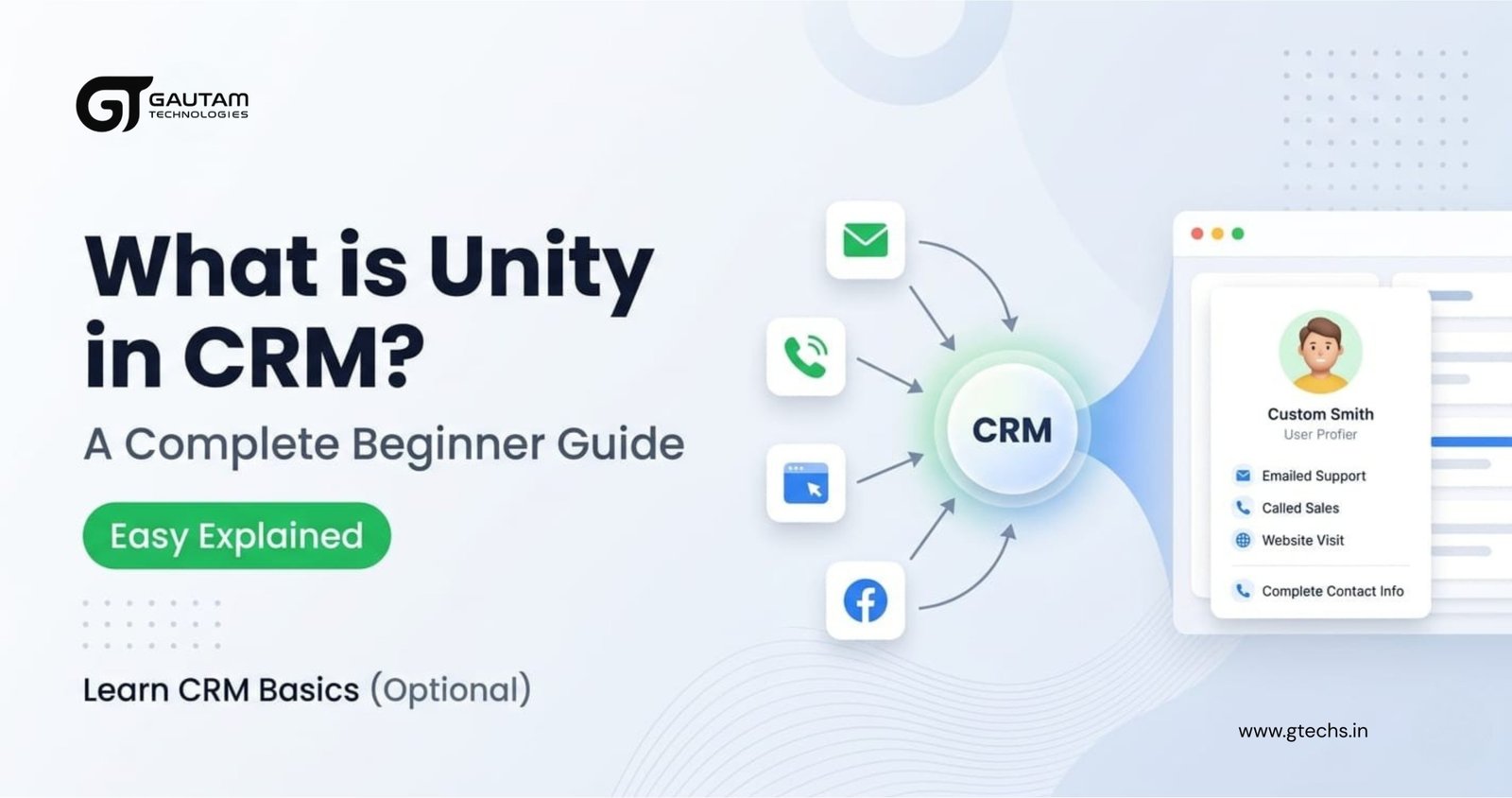
What is Unity in CRM? A Complete Beginner Guide
Authored by
Bandna Kumari
Date Released
3rd April, 2026
In today’s digital business environment, managing customer relationships has become more complex than ever. Businesses interact with customers through multiple channels such as websites, social media, emails, and calls. Each interaction generates valuable data, but when this data is stored in different systems, it creates confusion and inefficiency.
Customer Relationship Management (CRM) systems were introduced to solve this problem. However, traditional CRM systems often fail to provide a complete picture because data remains scattered across departments. Sales teams use one tool, marketing teams use another, and customer support operates separately.
This is where the concept of Unity in CRM becomes important. Unity means bringing all customer data, tools, and teams into one connected system. It ensures that every department works with the same information, improving coordination and decision-making.
Without unity, businesses struggle with poor communication, delayed responses, and inconsistent customer experiences. With unity, everything becomes streamlined, efficient, and customer-focused.
What is CRM in Simple Terms
CRM is a system that helps businesses store and manage customer information in one place. It includes details like contact information, purchase history, communication records, and support interactions.
A good CRM system allows businesses to track every interaction with a customer and use that data to improve relationships and increase sales. It acts like a central hub where all customer-related activities are recorded and managed.
Problems with Traditional CRM Systems
Traditional CRM systems often lack proper connectivity between different tools and departments. This leads to data silos, where information is isolated and not shared effectively.
Common problems include:
- Duplicate customer records across systems
- Lack of real-time data updates
- Poor coordination between teams
- Incomplete customer information
For example, a sales team may not know that a customer has already raised a complaint with the support team. This results in poor communication and a negative customer experience.
Why Data Silos are Harmful
Data silos prevent businesses from accessing complete customer information. When data is divided across departments, teams cannot collaborate effectively, leading to missed opportunities and errors.
Impact on Customer Experience
When customers have to repeat their issues multiple times or receive inconsistent responses, it creates frustration. This directly affects trust and can lead to customer loss
What is Unity in CRM (Detailed Explanation)
Unity in CRM refers to the process of integrating and aligning all customer-related data, tools, and processes into a single, unified system. It ensures that every department in a business has access to the same real-time information.
Unlike basic integration, unity goes a step further by creating a seamless flow of data across all systems. It eliminates duplication, reduces errors, and improves overall efficiency.
The main goal of unity is to create a “single source of truth,” where all customer information is accurate, updated, and easily accessible. This allows businesses to make better decisions and deliver personalized experiences.
Unity vs Integration vs Automation
Many people confuse these three concepts, but they are different:
- Integration connects different tools but does not fully unify data
- Automation handles repetitive tasks but does not provide full visibility
- Unity combines data, tools, and processes into one system
Unity ensures that everything works together, not just separately connected.
Real-Life Example of Unity in CRM
Consider a simple customer journey:
- A customer fills out a form on your website
- The marketing team sends follow-up emails
- The sales team contacts the customer
- The support team handles queries after purchase
In a unified CRM system, all these interactions are recorded in one place. Every team can see the complete history and respond accordingly.
Without Unity Scenario
Without unity, each department works with its own data. The customer may need to repeat information multiple times, leading to frustration and inefficiency.
With Unity Scenario
With unity, all teams access the same data. Communication becomes smooth, and the customer receives a consistent experience.
Core Components of Unity in CRM
To achieve unity in CRM, certain key components must be in place. These components ensure that the system functions effectively and delivers real value.
Key components include:
- Centralized customer database
- Real-time data synchronization
- Automation of workflows
- Integration with other business tools
- Cloud-based access
These elements work together to create a seamless and efficient system.
Centralized Data System
A centralized database stores all customer information in one place. This eliminates duplication and ensures that every team works with the same data.
Real-Time Data Synchronization
Real-time updates ensure that any change made in the system is instantly visible to all users. This improves accuracy and reduces delays.
Automation and Workflow Management
Automation helps businesses handle repetitive tasks such as sending emails, assigning leads, and scheduling follow-ups. This saves time and increases productivity.
Role of Cloud Technology
Cloud-based CRM systems allow businesses to access data from anywhere. This is especially useful for remote teams and growing businesses.
Importance of Integration
Integration ensures that the CRM system works smoothly with other tools like email platforms, marketing software, and ERP systems.
Benefits of Unity in CRM for Businesses
Unity in CRM offers several benefits that directly impact business growth and customer satisfaction. It helps organizations become more efficient, data-driven, and customer-focused.
Major benefits include:
- Complete 360-degree view of customers
- Improved sales conversion rates
- Better customer retention
- Stronger team collaboration
- Accurate reporting and analytics
These benefits make unity an essential part of modern CRM systems.
Better Customer Understanding
With a unified system, businesses can track the entire customer journey. This helps in understanding customer behavior and preferences.
Improved Sales Performance
Sales teams can access complete customer data, allowing them to make better decisions and close deals faster.
Enhanced Team Collaboration
When all teams work on the same platform, communication improves and errors are reduced.
Cost and Time Efficiency
Automation and streamlined workflows reduce manual work, saving both time and operational costs.
Data Accuracy and Reporting
Accurate data leads to better reports, which help in strategic planning and business growth.
How to Implement Unity in CRM Successfully
Implementing unity in CRM requires careful planning and execution. Businesses need to follow a structured approach to achieve the best results.
Choose the Right CRM Platform
Select a CRM system that supports integration, automation, and scalability. This ensures long-term success.
Clean and Organize Data
Before implementation, remove duplicate and outdated data. Clean data improves system performance.
Train Your Team
Employees must understand how to use the CRM system effectively. Proper training ensures better adoption.
Avoid Common Mistakes
Avoid overcomplicating the system and ensure proper planning during implementation.
Monitor and Optimize
Regularly monitor system performance and make improvements as needed.
Future of Unity in CRM
The future of CRM is moving towards deeper integration and smarter systems. Technologies like artificial intelligence and machine learning are making CRM systems more powerful.
Businesses are now focusing on predictive analytics, automation, and personalized customer experiences. Unity will play a key role in enabling these advancements by ensuring that all data and systems work together seamlessly.
As digital transformation continues, unified CRM systems will become a standard requirement for businesses of all sizes.
Conclusion
Unity in CRM is not just a technical feature but a strategic necessity for modern businesses. It brings together data, tools, and teams into one system, creating a seamless and efficient workflow.
By adopting a unified CRM approach, businesses can improve customer experience, enhance team collaboration, and make better decisions. It also helps in increasing sales, reducing costs, and achieving long-term growth.
In a competitive market, businesses that implement unity in CRM will have a clear advantage over those that rely on fragmented systems.
FAQs
What is Unity in CRM in simple words?
Unity in CRM means combining all customer data, tools, and teams into one system for better management.
Why is Unity important in CRM?
It improves efficiency, enhances customer experience, and helps in better decision-making.
How does Unity improve sales?
It provides complete customer insights, allowing sales teams to close deals faster.
Is Unity in CRM suitable for small businesses?
Yes, it helps small businesses manage data efficiently and improve customer relationships.