
The Future of E-Commerce Development: Trends to Watch in 2025
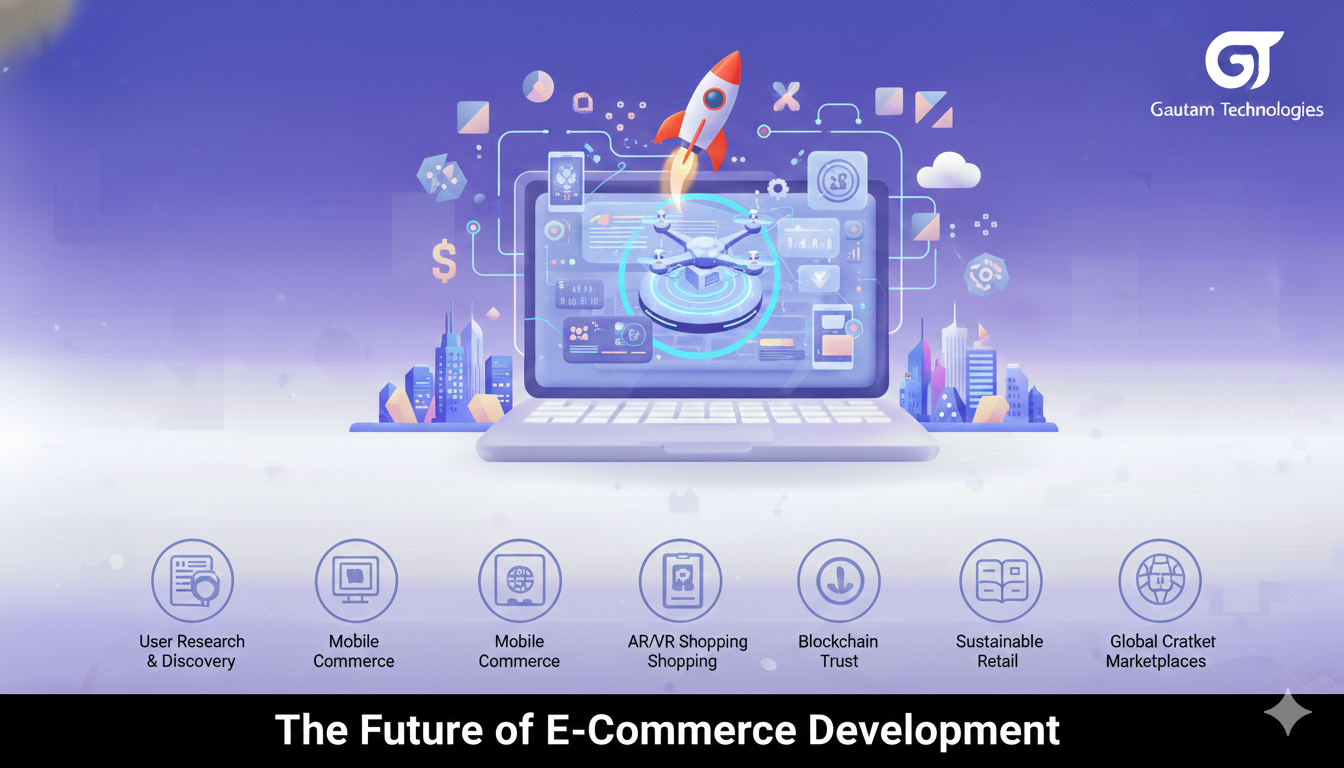
The Future of E-Commerce Development: Trends to Watch in 2025
Authored by
Admin
Date Released
02 Feb, 2025
E-commerce development trends 2025 the world of e-commerce is changing radically due to the changes in artificial intelligence (AI), immersive technology, and changing consumer expectations. Any business that goes with these changes will be able to open new avenues of growth whereas those that resist it will face the risk of becoming obsolete. It is a detailed analysis of the most influential trends of e-commerce that will influence the industry this year.
1. AI-Powered Personalization: The New Standard
AI in e-commerce is becoming a necessity and not a luxury to e-commerce enterprises that seek to provide customers with personalized shopping experiences. By the year 2025, AI offers hyper-personalized suggestions of products, dynamic pricing, and personalized content delivery. HelloRep.ai project that the market of AI-enabled e-commerce will amount to 8.65 billion in 2025, 89 percent of businesses are already using or testing AI technologies. The retailers are considering AI to study customer behavior, forecast their purchasing patterns and optimize inventory, resulting into a higher customer satisfaction and higher conversion rates.
2. Conversational Commerce and Voice Search
Consumers are beginning to interact with the brands using voice-activated machines and chat applications. Voice commerce enables customers to search and place orders and personalized recommendations with the use of natural language. This change is enabled by the development of AI and natural language processing, which is more intuitive and accessible to the shopping process. effective.
Social networks such as Google and Amazon are improving their voice search technology, which allows shopping experience to be easily integrated into conversations.
3. Immersive Shopping with Augmented Reality (AR)
By implementing AR, customers can view the products in the real world before purchasing them as it is an online shopping method that is transforming the way people shop. AR can transform the experience between online and offline shopping, as virtual try-on in fashion and beauty or visualizing furniture in the house are just some examples of AR. Salsify suggests that by 2025, 42 percent of U.K. and 41 percent of U.S. shoppers will be shopping online via AR.
AR technologies are being utilized by brands to develop customer interaction and lower the returns, which make their purchasing choices more informed.
4. Social Commerce: Shopping via Social Media
The social media is becoming an effective tool of Augmented reality shopping where users can find products and buy them right on their feeds. This is a trend that is referred to as social commerce and customers are pursuing a smooth and interactive shopping experience. DHL E-Commerce Trends Report 2025 states that 7 out of ten shoppers in the world today desire retailers to provide them with AI-powered shopping services, including those that combine with Social commerce platforms.
Social commerce is enabling brands to build trust and make sales using in fluencers, live-streaming events, and user-generated content.
5. Sustainable and Ethical E-Commerce Practices
The consumers are becoming more concerned about sustainability and ethical consideration in their buying choices. Sustainable e-commerce practices companies are reacting by complying with eco-friendly packaging, providing carbon-neutral delivery, and providing ethical source acquisition of goods. NRS Plus says that 64 percent of Gen Z customers are ready to give up more to purchase environmentally friendly products.
Brands that do match these values do not only help in the conservation of the environment, but also establish better relations with conscious consumers.
6. Omnichannel Shopping Experiences
The contemporary consumers seek to have an impeccable shopping process across all platforms such as online shopping, mobile application, and physical retail stores. Omnichannel solutions allow customers to do research on products online, buy them in-store or the other way round, which is flexible and convenient. Salsify reveals that the omnichannel shoppers are likely to spend between 1.5 and 3 times compared to in-store shoppers.
The retailers are combining both their online and offline efforts to provide integrated experiences, including Buy Online, Pick Up In-Store (BOPIS) and real-time inventory information.
7. Retail Media Networks: A New Revenue Stream
Retailers are also becoming profitable by providing advertising opportunities to brands on their platforms via retail media networks. These networks enable the advertiser to serve personalized advertisement to the consumers depending on their shopping habits and preferences. Publicis Sapient expects retail media to serve as a platform to accept more advertising income than television by 2028, at 15.4% of all advertising income.
With first-party data, retailers can offer a better insight into the data to the advertisers and propose more efficient advertising solutions.
8. AI-Driven Customer Service
Chatbots and virtual assistants are improving customer service due to the use of AI that responds instantly to customer inquiries, fixes customer problems, and presents customers with a shopping path. The solutions are round the clock and 24/7 AI-driven solutions offer consistency and effective services. BigCommerce says that AI is reshaping the e-commerce industry through making the process of personalization, prediction and checkout more efficient.
Automation of routine business activities leads to a business focusing more on complex customer needs and enhancing customer satisfaction.
9. Blockchain for Transparency and Security
The use of blockchain technology is under consideration to improve on transparency and security in online business dealings. The blockchain can ensure the authenticity of the products, supply chain, and prevent fraud by offering a decentralized and immutable registry. As stated by Forbes, blockchain is among the new technologies that will redefine e-commerce because it offers secure and transparent ways of transactions.
AThe blockchain provides an opportunity to create trust and credibility as consumers become more worried about data privacy and product authenticity.
10. Subscription-Based E-Commerce Models
The subscription services are emerging and becoming popular among consumers in terms of convenience and customized experiences. E-commerce companies are also providing products subscription models of products such as beauty items through to groceries which enables the customers to have regular supplies according to their preferences. The subscription-based models are projected to be a huge trend in the e-commerce by 2025 according to NRS Plus.
These models give the business predictable sources of revenues and also create long term relationships with the customers.
Conclusion
The 2025 e-commerce environment will be marked by the high rate of technology development as well as changing consumer demands. Companies that use AI, adopt immersive technologies, and are focused on sustainability have a high chance of surviving in this dynamic world. Through ensuring that they are aware of these trends and adjust strategies as as appropriate, e-commerce companies can maximize customer experiences to achieve growth and a competitive advantage in the market.