
Top Web Development Technologies for Your startup
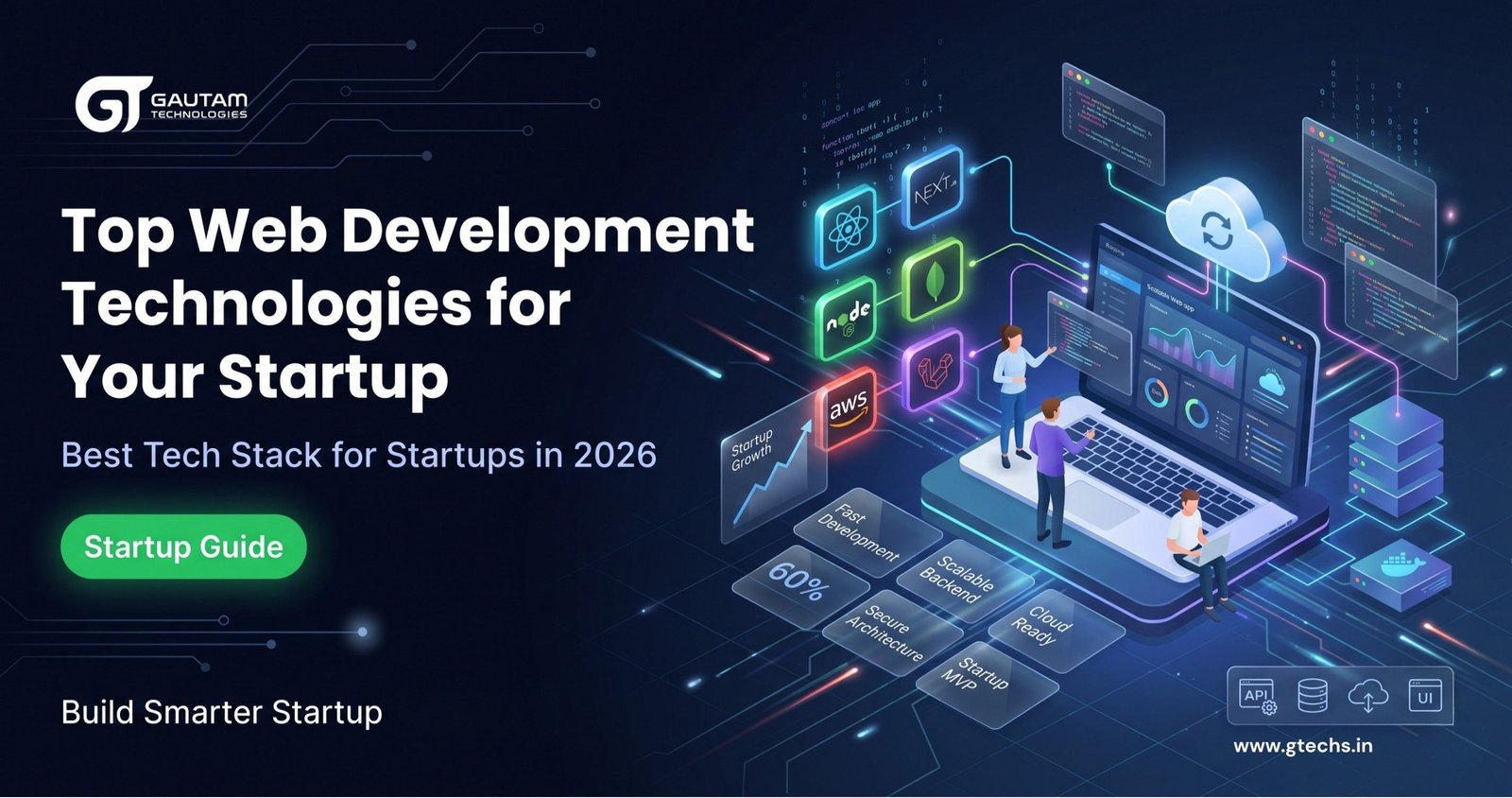
Top Web Development Technologies for Your startup
Authored by
Bandna Kumari
Date Released
30th April, 2026
Choosing the right Web Development Technologies is one of the most important decisions for any startup. Your tech stack directly impacts website performance, scalability, security, and overall user experience. A poor choice can slow growth, increase costs, and create future technical limitations that are difficult to fix.
In today’s competitive digital landscape, startups need fast, scalable, and user-friendly applications to succeed. Understanding the best web development technologies for startups helps businesses build efficient products that meet user expectations. A strong modern web development tech stack ensures smooth functionality and long-term flexibility.
By selecting the right combination of frontend and backend technologies, startups can create powerful and scalable solutions. This guide will help you explore the most effective Web Development Technologies and choose the best options to support your business growth.
Why Web Development Technologies Matter for Startups
In a startup environment where speed and adaptability matter most, choosing the right Web Development Technologies can make a real difference. The technology you select directly impacts how fast your product launches, how smoothly it performs, and how easily it scales as your business grows. A well-planned tech stack helps you build a reliable, secure, and user-friendly application without unnecessary complexity.
As your startup evolves, the right Web Development Technologies ensure your platform can handle increasing users, new features, and market demands without performance issues. This not only improves user experience but also reduces long-term costs, helping your business stay competitive in a rapidly changing digital landscape.
Key Benefits of Using the Right Web Development Technologies
- Establish credibility and build customer trust
- Clearly communicate your value proposition
- Showcase products or services effectively
- Create a strong and consistent brand identity
- Launch your product faster
- Reduce development and maintenance costs
- Scale your application easily as your business grows
- Improve website speed and overall performance
- Enhance user experience and engagement
A well-chosen tech stack ensures your startup remains future-ready, competitive, and capable of adapting to the latest digital trends.
Frontend Web Development Technologies
Frontend Web Development Services are responsible for everything users see and interact with on a website. From layout and design to animations and user experience, the frontend plays a key role in making your application engaging, responsive, and easy to use. For startups, choosing the right modern web development tech stack on the frontend ensures faster development and better performance.
1. Core Markup & Languages (Foundation)
Every web application starts with these essential technologies:
- HTML : Structures the content of web pages
- CSS : Styles layouts, colors, and design elements
- JavaScript : Adds interactivity and dynamic behavior
- TypeScript : Enhances JavaScript with type safety
- Sass / Less : Advanced CSS with variables and reusable styles
These core frontend and backend technologies form the base of any scalable web solution.
2. Frontend Frameworks & Libraries
Modern frameworks help startups build fast and scalable applications:
- React : Component-based library for dynamic UI
- Angular : Full-featured framework for large applications
- Vue.js : Lightweight and flexible framework
- Next.js / Nuxt.js : Optimized frameworks for performance and SEO
- Svelte : Compiler-based framework for faster apps
These tools are widely used in best Web Development Services for startups due to their flexibility and speed.
3. CSS Frameworks & UI Design Tools
To create responsive and visually appealing designs:
- Bootstrap : Popular responsive design framework
- Tailwind CSS : Utility-first styling for custom designs
- Bulma / Foundation : Modern CSS frameworks
- Material UI / Ant Design : Ready-to-use UI components
These frameworks improve design efficiency and user experience.
4. State Management & UI Component Libraries
For handling complex applications and improving scalability:
- Redux / MobX / Zustand : Manage application state efficiently
- Recoil / Vuex : Simplify state handling in modern apps
- Material UI / Shadcn UI / Radix UI : Build consistent interfaces
Using these scalable web development solutions, startups can maintain performance even as applications grow.
5.What Are Modern Frameworks in Web Development?
Modern frameworks are an essential part of today’s Web Development Services, helping developers build fast, scalable, and interactive web applications. They provide a structured approach with reusable components and pre-built functionalities, reducing development time and effort. Instead of coding everything from scratch, startups can use these frameworks to create efficient and high-performing applications.
In a modern web development tech stack, frameworks like React, Angular, and Vue.js improve user experience by enabling dynamic interfaces and smooth performance. They also support scalability, making it easier to handle growing users and features. This makes them a key part of frontend and backend technologies for building reliable and future-ready applications.
Key Benefits of Modern Frameworks
- Faster development with reusable components
- Improved performance and speed
- Scalable architecture for growing startups
- Better code organization and maintainability
- Enhanced user experience with dynamic UI
- Strong community support and regular updates
Backend Web Development Technologies
Backend Web Development Technologies handle server-side logic, databases, and overall application functionality. They ensure your website or application works smoothly behind the scenes, managing data processing, authentication, and business logic. For startups, choosing the right backend is essential for building secure, scalable, and high-performing applications.
A strong backend setup in a modern web development tech stack allows startups to manage complex operations, handle large user traffic, and integrate advanced features like APIs and real-time services. The right combination of frontend and backend technologies ensures seamless performance and long-term scalability.
1. Core Backend Technologies
- Node.js : Fast, scalable, and uses JavaScript on the server; ideal for real-time applications
- Python : Simple and powerful; best for AI and data-driven applications
- PHP : Cost-effective and widely used for web development
- Java : Highly secure and suitable for enterprise-level applications
2. Popular Backend Frameworks
- Express.js : Minimal and flexible Node.js framework
- Nest.js : Scalable and structured Node.js framework
- Koa : Lightweight and modern Node.js framework
- Meteor : Full-stack JavaScript platform
- Django : Secure and scalable Python framework
- Flask : Lightweight Python framework for simple apps
- Laravel : Elegant and developer-friendly PHP framework
- CakePHP : Rapid development PHP framework
- Spring Boot : Enterprise-grade Java framework
- Ruby on Rails : Convention-based framework for fast development
- Phoenix : High-performance framework built with Elixir
- Strapi : Headless CMS for building APIs quickly
By using these Web Development Services, startups can build powerful backend systems that support scalability, improve performance, and ensure secure data handling, making them essential for modern web applications.
Popular Full-Stack Frameworks for Startups
These Web Development Services are widely used to build scalable and high-performance full-stack applications:
- Node.js + Express.js (JavaScript Framework)
Fast and scalable solution for building modern web applications using JavaScript on both frontend and backend. - Django (Python Framework)
Secure and powerful framework ideal for data-driven and scalable applications. - Svelte + Sapper (JavaScript Framework)
Lightweight and fast framework focused on performance and minimal code. - Next.js (React Framework)
SEO-friendly framework with server-side rendering and high performance. - Ruby on Rails (Ruby Framework)
Convention-based framework for rapid development and clean code structure. - Laravel (PHP Framework)
Elegant and developer-friendly framework for building secure web applications. - Spring Boot (Java Framework)
Enterprise-grade framework known for scalability and security. - Flask (Python Framework)
Lightweight and flexible framework suitable for small to medium applications. - Meteor.js (JavaScript Framework)
Full-stack platform for building real-time web applications. - ASP.NET Core (C# Framework)
High-performance framework by Microsoft for scalable and secure applications.
Database Technologies for Startups
Choosing the right database is a key part of Web Development Services for startups, as it directly impacts performance, scalability, and data management. A strong database system ensures fast data access, secure storage, and smooth application functionality. In a modern web development tech stack, SQL databases are ideal for structured data and complex queries, while NoSQL databases offer flexibility for rapidly growing applications. Selecting the right option helps startups build scalable web development solutions, improve user experience, and handle increasing data efficiently while keeping development and maintenance costs under control.
Relational Databases (SQL)
- MySQL : Widely used for stable and structured data management
- PostgreSQL : Powerful database known for handling complex operations
Ideal For: Applications that require fixed data structure, accuracy, and advanced querying.
Non-Relational Databases (NoSQL)
- MongoDB : Flexible, document-based database for modern apps
- Firebase : Cloud-based database with real-time data syncing
Ideal For: Dynamic applications, rapid scaling, and projects with changing data formats.
Using the right database in your modern web development tech stack helps startups build efficient, scalable, and high-performing applications that grow with business needs.
Cloud-Based Web Development Technologies
Cloud-based Web Development Services play a crucial role in helping startups build scalable, flexible, and cost-efficient applications. Instead of relying on physical servers, cloud platforms allow businesses to host, manage, and deploy applications online with ease. Services like AWS, Google Cloud, and Microsoft Azure provide on-demand resources, enabling startups to scale their infrastructure based on user demand. This ensures better performance, high availability, and improved security. By integrating cloud solutions into a modern web development tech stack, startups can reduce operational costs, speed up deployment, and focus more on innovation and growth without worrying about infrastructure management.
Top Cloud Platforms
- AWS
- Google Cloud
- Microsoft Azure
Benefits
- Scalability on demand
- Reduced infrastructure costs
- High security and reliability
Cloud computing plays a major role in scalable web development solutions.
DevOps and Deployment Technologies
DevOps and deployment are essential parts of modern Web Development Services, helping startups automate, manage, and deliver applications efficiently. Tools like Docker and Kubernetes streamline deployment, while CI/CD platforms such as Jenkins and GitHub Actions enable faster and error-free updates. By integrating DevOps into a modern web development tech stack, startups can improve collaboration, ensure continuous delivery, and maintain high performance, making their applications more reliable and scalable.
- Docker – Containerization
- Kubernetes – Automation and scaling
- GitHub Actions / Jenkins – Continuous integration and delivery
These tools help startups manage development efficiently.
Latest Web Development Trends
Keeping up with the latest web development trends helps startups stay competitive in a rapidly evolving digital landscape. New technologies enable businesses to build faster, more secure, and highly scalable applications. By adopting modern tools and practices, startups can improve user experience, streamline development, and respond quickly to market changes. Staying updated also allows companies to integrate innovative features, optimize performance, and reduce long-term costs, ensuring their products remain relevant, efficient, and capable of meeting growing user expectations.
1. Progressive Web Apps (PWA)
- Works like a mobile app
- Fast and offline-ready
2. AI Integration
- Chatbots and automation
- Personalized user experience
3. Serverless Architecture
- No need to manage servers
- Cost-efficient and scalable
4. Web3 and Blockchain
- Decentralized applications
- Enhanced security
How to Choose the Right Web Development Technologies
Selecting the right Web Development Technologies is essential for building a scalable and high-performing application. Instead of following trends, startups should focus on a modern web development tech stack that aligns with their business needs, budget, and future growth plans. A well-informed decision helps reduce costs, improve efficiency, and deliver a better user experience.
Key Factors to Consider
1. Business Goals
Clearly define what you want to build whether it’s a simple website, e-commerce platform, or SaaS product. Your goals determine the type of scalable web development solutions you need.
2. Budget
Choose technologies that fit your financial plan. Open-source tools can reduce costs while still delivering strong performance and flexibility.
3. Scalability
Ensure your application can handle future growth, including more users, data, and features, without performance issues.
4. Development Speed
Faster development helps startups launch quickly and gain a competitive edge in the market.
5. Team Expertise
Use frontend and backend technologies your team is familiar with to improve productivity and reduce development risks.
Get Started with Gautam Technologies
If you’re planning to build a scalable and high-performing application using the right Web Development, Gautam Technologies is ready to help you turn your idea into reality. With expertise in modern tech stacks and startup-focused solutions, the team ensures your project is built for speed, performance, and long-term growth. Whether you need development support or expert guidance, you can easily connect and get started.
Reach out today at thegtechs@gmail.com or call +91 7521878485 to discuss your requirements and take the next step toward building a powerful digital product.
FAQs (AEO Optimized Section)
1. What are the best web development technologies for startups?
The best technologies include React, Node.js, Python, and cloud platforms like AWS.
2. Which tech stack is best for scalability?
The MERN stack is widely used for scalable web applications.
3. What is the difference between frontend and backend technologies?
Frontend handles user interface, while backend manages server logic and databases.
4. Why are cloud technologies important?
They provide scalability, security, and cost efficiency.
5. How do I choose the right web development technology?
Consider your business goals, budget, scalability, and team expertise.