
A Complete Guide to Food Delivery Mobile App Development in 2026
A Complete Guide to Food Delivery Mobile App Development in 2026
Authored by
Bandna Kumari
Date Released
11th April, 2026
Food habits have gone digital. People no longer search for restaurant numbers or wait in queues. They open an app, browse menus, place orders, track delivery in real time, and pay online within seconds. This shift in user behavior has made food delivery mobile app development one of the most profitable opportunities for startups, restaurants, and cloud kitchens in 2026.
However, building a successful platform requires more than just an app. You need the right food delivery app features, a reliable technology stack for food delivery app, a structured food delivery app development process, and a clear understanding of the cost to develop a food delivery app. This comprehensive, SEO-optimized guide explains each step in detail so you can plan, build, and launch a powerful food delivery solution.
The Rise of Online Food Ordering in 2026
Urban lifestyles, dual-income families, digital payments, and smartphone penetration have accelerated online ordering. Customers expect convenience, speed, and transparency. They want to see reviews, compare prices, track riders, and receive food without calling anyone.
Cloud kitchens and home chefs are also expanding rapidly. Since they operate only for delivery, they depend entirely on apps. This demand is pushing businesses toward investing in food delivery mobile app development to stay competitive.
What Is Food Delivery Mobile App Development?
Food delivery platforms are multi-panel systems that connect four main users:
- Customers placing orders
- Restaurants or cloud kitchens preparing food
- Delivery partners delivering orders
- Admin managing the system
All these components work together through APIs and cloud servers. A proper food delivery app development process ensures smooth communication between each panel in real time.
Choosing the Right Business Model
Before starting development, define your model.
Aggregator apps list multiple restaurants and earn commission.
Restaurant-owned apps handle direct orders without intermediaries.
Cloud kitchen apps focus purely on delivery operations.
Your business model influences required food delivery app features and the overall cost to develop a food delivery app.
Essential Food Delivery App Features for Customers
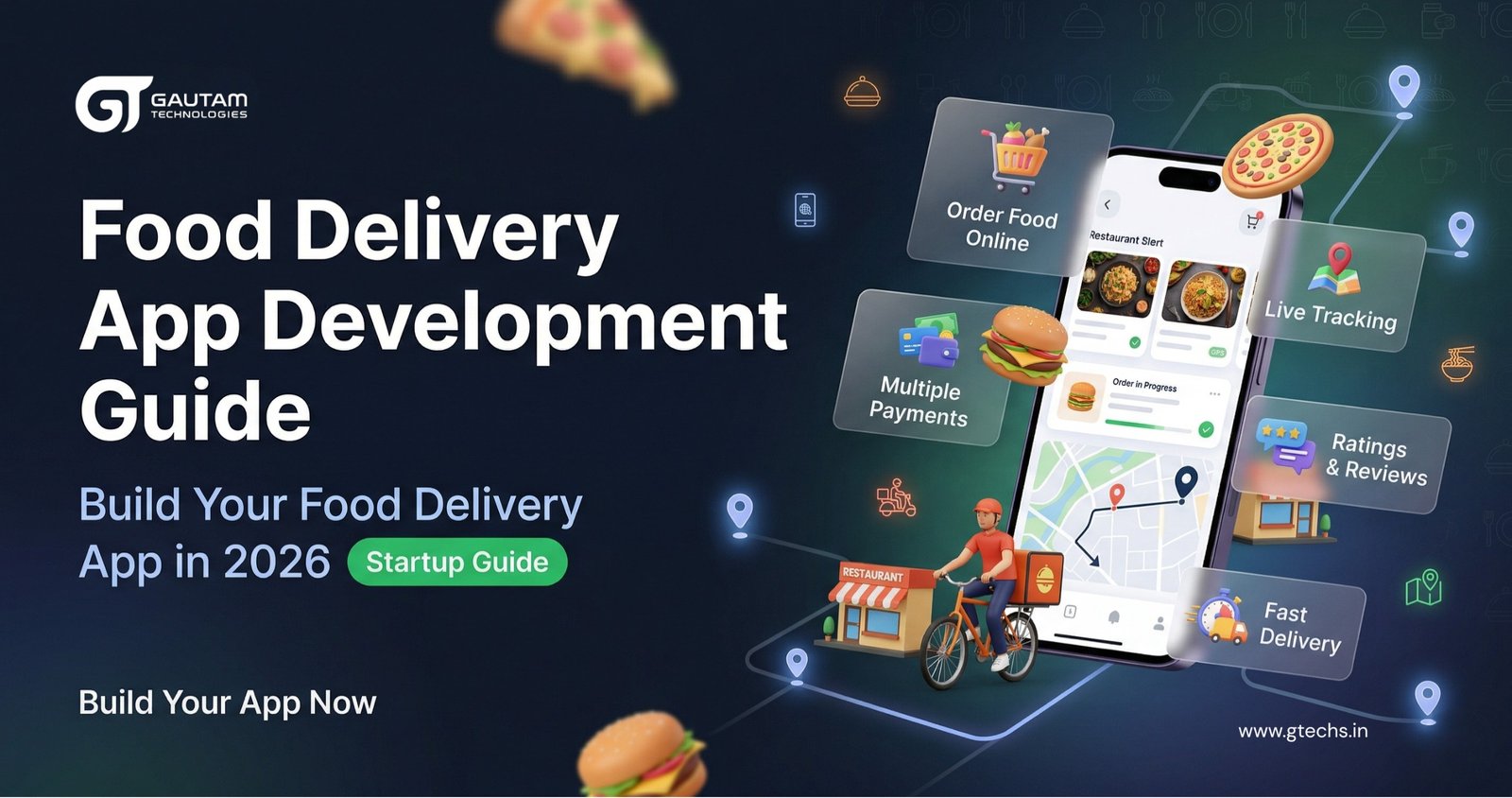
Customers judge your app by its simplicity and speed. Important food delivery app features include:
- Quick registration and login
- Restaurant discovery with smart filters
- Clear menus with images and pricing
- Smooth cart and checkout process
- Secure digital payments
- Real-time order tracking with ETA
- Push notifications and order history
- Ratings, reviews, and re-order option
Adding wishlist, scheduled orders, and multi-language support enhances user experience.
Restaurant or Kitchen Dashboard Features
Restaurants need tools to manage menus, update prices, accept orders, update preparation status, create offers, and view earnings. These food delivery app features help kitchens operate efficiently during peak hours.
Delivery Partner App Features
Delivery partners require order alerts, pickup and drop details, GPS navigation, route optimization, and earnings tracking. Accurate tracking is one of the most critical food delivery app features for customer satisfaction.
Admin Panel Capabilities
The admin panel controls the entire platform. It manages users, restaurants, delivery partners, commissions, offers, reports, and disputes. This panel ensures your food delivery mobile app development results in a manageable and scalable system.
Advanced Features to Compete in 2026
Modern apps integrate AI-based food suggestions, voice search ordering, chatbots, loyalty programs, subscription plans, contactless delivery, and predictive ordering.
These advanced food delivery app features increase engagement and repeat orders.
Selecting the Best Technology Stack for Food Delivery App
A powerful technology stack for food delivery app ensures performance and scalability.
- Flutter or React Native for cross-platform apps
- Kotlin and Swift for native performance
- Node.js, Laravel, or Django for backend APIs
- PostgreSQL or MySQL databases
- Firebase for real-time updates
- Google Maps API for GPS tracking
- Secure payment gateway integration
- Cloud hosting on AWS or Google Cloud
Choosing the right technology stack for food delivery app prevents downtime during high traffic.
Step-by-Step Food Delivery App Development Process
A clear food delivery app development process includes:
Research and Planning to analyze competitors and target users.
UI/UX Design to create wireframes and prototypes.
Development of customer app, restaurant panel, delivery app, and admin panel.
Testing for bugs, performance, and security.
Deployment on app stores and cloud servers.
Maintenance for updates and improvements.
Following this food delivery app development process ensures timely launch.
Understanding the Cost to Develop a Food Delivery App
The cost to develop a food delivery app depends on app complexity, features, integrations, design, and platforms. Basic MVP apps cost less, while advanced apps with AI and real-time tracking require higher investment.
Planning the cost to develop a food delivery app early avoids budget issues.
Monetization Opportunities
Revenue sources include commissions, delivery fees, featured listings, subscriptions, ads, and surge pricing. These methods make food delivery mobile app development financially rewarding.
Common Challenges and Practical Solutions
Logistics, tracking accuracy, peak traffic, and user retention are major challenges. These can be solved with a robust technology stack for food delivery app and continuous updates.
Tips to Make Your App Stand Out
Offer fast performance, simple checkout, attractive discounts, reliable support, and personalized experiences. Analyze user data to improve engagement.
Future of Food Delivery Apps
Drone delivery, robotic kitchens, and AI automation will redefine food delivery mobile app development in coming years.
Call to Action
Planning to launch your own food delivery platform?
Now is the perfect time to invest in food delivery mobile app development with the right strategy, features, and technology.
Connect with Gautam Technologies (Gtechs) for expert guidance, a clear feature roadmap, and a transparent cost estimate tailored to your idea.
Email : thegtechs@gmail.com
Call Now : +91 7521878485
Get your free consultation today and start building your food delivery app with confidence.
Frequently Asked Questions (FAQ)
Q1. How much time does food delivery mobile app development take?
Usually 8–16 weeks based on features and complexity.
Q2. What are the must-have food delivery app features?
Live tracking, payment integration, restaurant panel, and delivery partner app.
Q3. What is the cost to develop a food delivery app?
The cost to develop a food delivery app varies depending on features and technology used.
Q4. Which technology stack for food delivery app is best?
Flutter or React Native with Node.js backend and cloud hosting is ideal.
Q5. Can the app be upgraded later?
Yes, you can start with MVP and scale gradually following the proper food delivery app development process.
Conclusion
The demand for online food ordering is only increasing. By focusing on essential food delivery app features, selecting a strong technology stack for food delivery app, following a structured food delivery app development process, and understanding the cost to develop a food delivery app, you can launch a successful solution in 2026.
This is the right time to turn your idea into a scalable food delivery application.